


In the fundamental analysis section of a trading course, key macroeconomic indicators like Non-Farm Payrolls (NFP), interest rate decisions, inflation reports, GDP growth, unemployment data, and consumer confidence move the markets. Below we explain each of these events, why they impact the market, and how they typically affect currencies, stock indices, and commodities. We also include examples of market reactions, a brief guide to using an economic calendar, and which types of traders tend to trade around or avoid these announcements.
Non-Farm Payrolls (NFP)
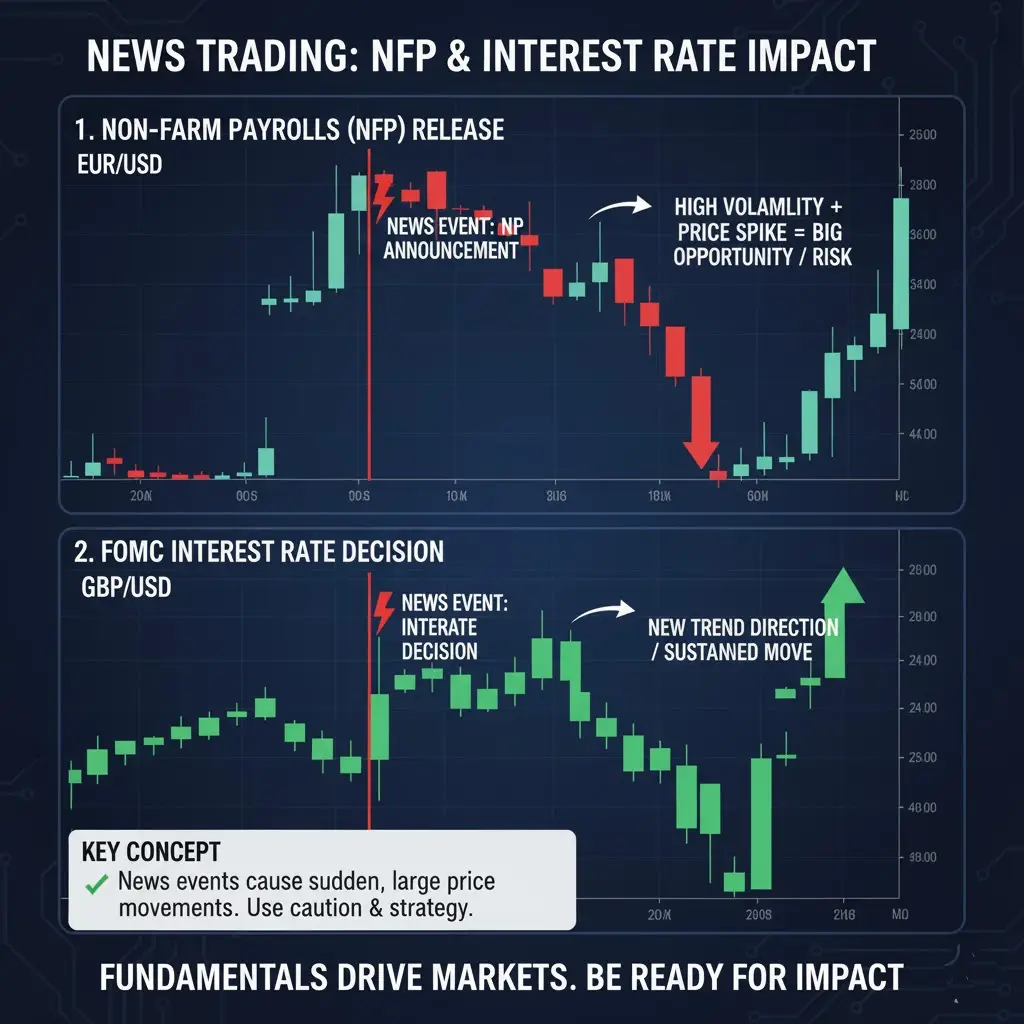
Non-Farm Payrolls (NFP) in the U.S. are released on the first Friday of each month. They measure new jobs created (excluding agriculture) and are a barometer of economic health. An NFP above expectations signals a strong economy, usually strengthening the U.S. dollar. This causes high volatility, especially in pairs like EUR/USD or USD/JPY.
- Example scenario: Consensus was +200,000 jobs, but the NFP report shows +250,000. Immediately, the USD would appreciate: EUR/USD might drop several pips, U.S. stock indices could tick up on improved economic outlook, and gold prices would likely fall with a stronger dollar.
Typical asset reactions:
- Currencies: Strong NFP → USD rises, other currencies (e.g. EUR, JPY) fall (e.g. EUR/USD drops). Weak NFP → USD falls, EUR/USD rises.
- Stock Indices: Strong jobs figures can boost stock markets (more consumer spending expected), though sometimes stocks dip if traders fear resulting inflation and rate hikes. Weak jobs can drag stocks down.
- Commodities: Gold usually falls on a strong dollar. Oil may rise if a strong jobs report signals robust demand.
Central Bank Interest Rate Decisions
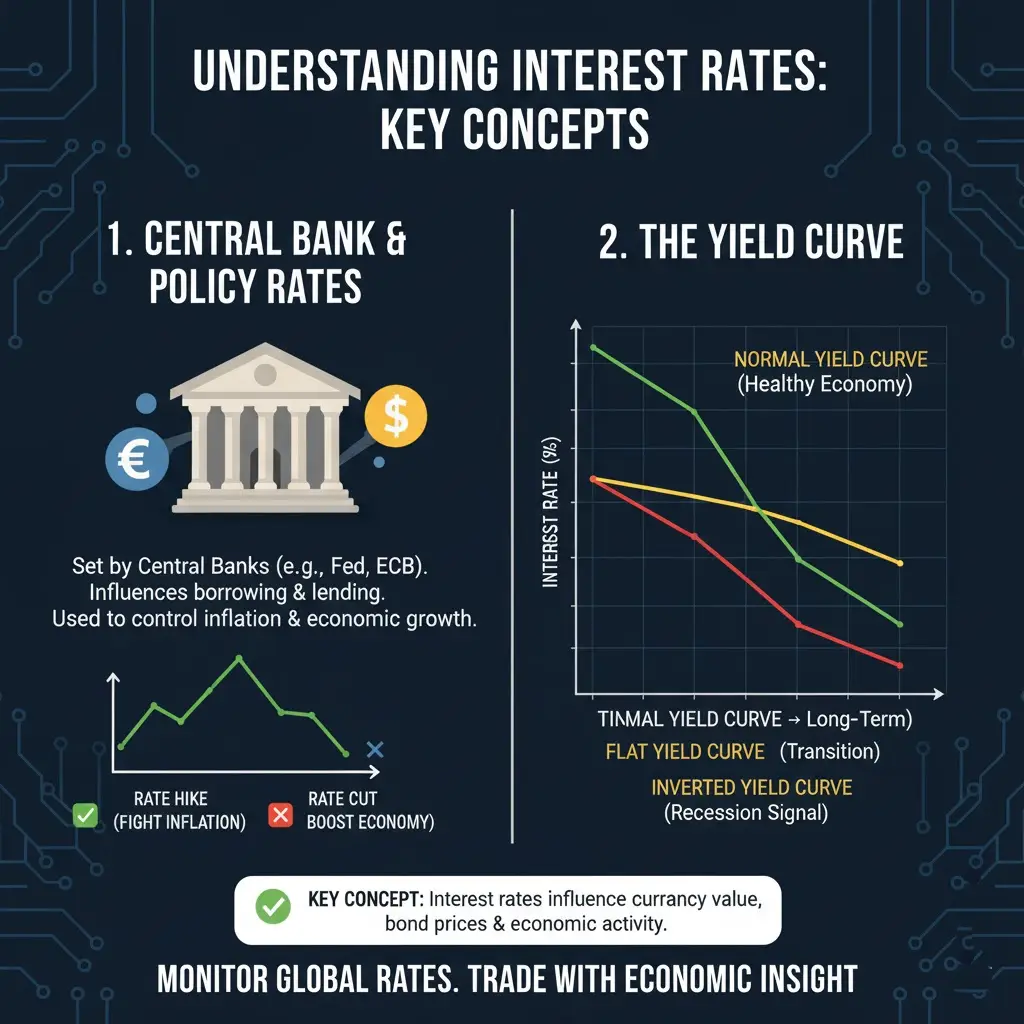
Decisions by central banks (Fed, ECB, BoE, etc.) on interest rates are watched globally. When a central bank raises rates: the local currency generally strengthens (higher yields) and stock markets tend to fall (higher borrowing costs, lower present value of profits). Gold typically falls (higher opportunity cost), and bond prices fall (yields rise). Conversely, a rate cut tends to weaken the currency and boost stocks and gold.
- Example scenario: The Fed unexpectedly hikes rates by 50 basis points. The U.S. Dollar Index (DXY) jumps, EUR/USD falls. The S&P 500 declines on concerns about higher financing costs. Gold prices drop.
Typical asset reactions:
- Currencies: Higher rates → currency strengthens (USD, EUR, GBP go up). Lower rates → currency weakens.
- Stock Indices: Rate hikes → indices fall; rate cuts → indices rise (more liquidity).
- Commodities: Gold falls on rate hikes, often rises on cuts. Oil may decline if higher rates suggest weaker future demand.
Inflation Reports (CPI)
Inflation reports, such as the Consumer Price Index (CPI), measure price changes for consumers. If inflation is much higher than expected, markets expect steeper rate hikes, so the local currency strengthens and stocks and bonds fall. For example, a much higher-than-forecast CPI in the U.S. would likely send the USD up and pressure the S&P 500 lower. Gold can react two ways: it may rise on high inflation (as an inflation hedge) but then fall if aggressive rate hikes follow. Oil often rises if high inflation signals strong demand ahead.
- High inflation: currency up, stocks and gold down (due to expected rate hikes).
- Low inflation: currency may weaken, stocks often rise (easing rate pressure).

GDP Growth
Gross Domestic Product (GDP) shows economic growth. A higher-than-expected GDP indicates a strong economy: currency strengthens (optimistic investors), stock indices rise (higher expected corporate earnings), and industrial commodities rise (strong demand). A weak GDP reading does the opposite: currency weakens, stocks fall, commodity demand outlook weakens.
- High GDP: currency up, stocks up, commodities (like copper, oil) up.
- Low GDP: currency down, stocks down, commodity prices down.
Unemployment Data
Unemployment figures complement NFP. A low unemployment rate (fewer jobless) indicates a robust labor market: the local currency typically appreciates (healthy economy) and stocks rise (higher consumer spending). A high unemployment rate signals weakness: the currency tends to weaken and stocks fall. For example, a surprising jump in U.S. unemployment could weaken the USD and trigger stock declines.
- Low unemployment: currency strong, stocks up.
- High unemployment: currency weak, stocks down.
Consumer Confidence
Consumer confidence indices measure household sentiment. High confidence suggests more consumer spending, so retail and stock markets often rise and the currency slightly strengthens on growth optimism. Low confidence hints at slower spending, causing modest stock declines (especially in consumer sectors) and strengthening of safe-haven assets (e.g. USD, JPY, gold). These reports have moderate impact but influence overall market sentiment.
Economic Calendar
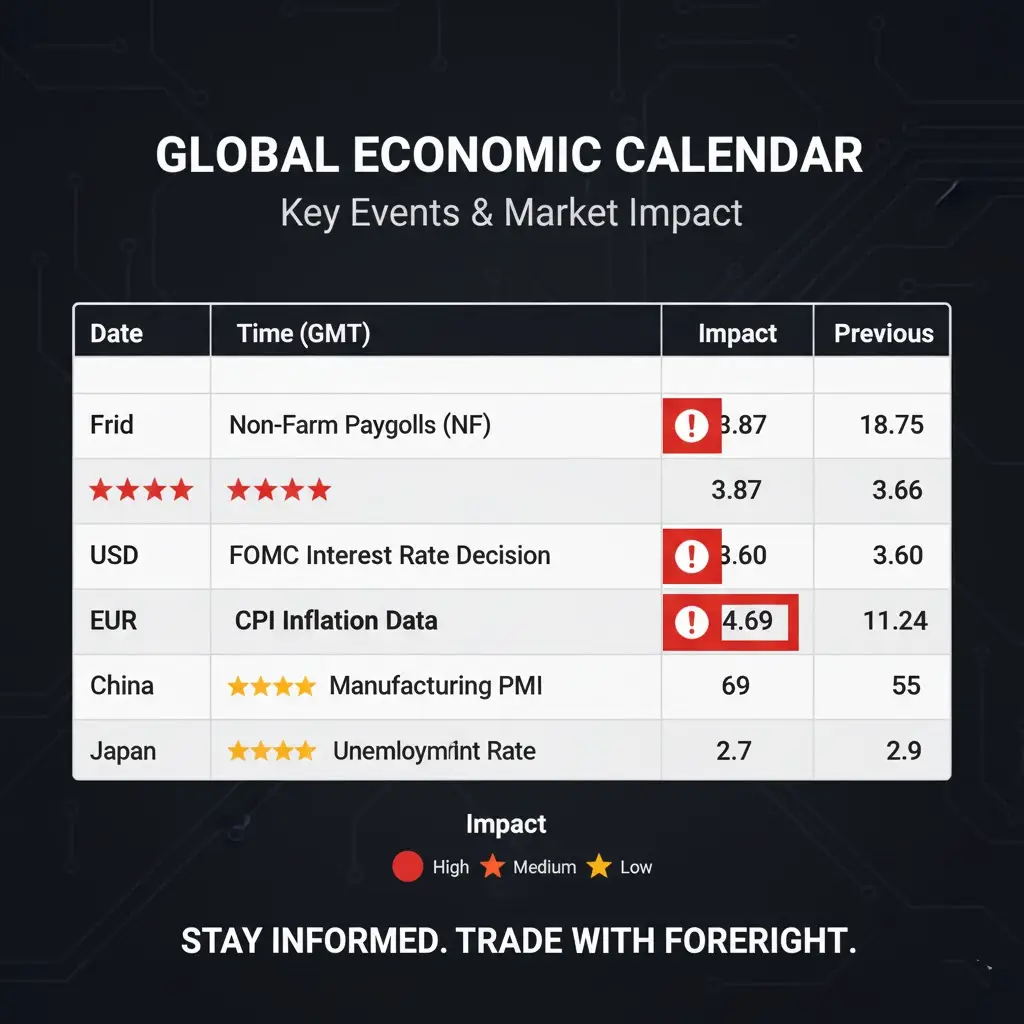
Economic calendars list dates and times of key data releases (showing country, previous value, forecast, and impact level). Traders check the calendar daily to plan. It’s vital to set the local time and filter for relevant countries and high-impact events. Typical steps:
- Review events at the start of the trading day, focusing on high-impact releases (often color-coded).
- Check market consensus and previous figures so you know what to compare the actual result against.
- Plan accordingly: close or hedge positions before big news, or set entry/exit orders. Avoid large exposure right before critical releases to manage risk.
For example, a trader might close a USD position before the NFP release to avoid volatility, or place limit orders anticipating a sharp move.
Trader Profiles
- Scalpers and Day Traders: They seek out news events. The volatility provides quick moves in minutes or hours, which they try to exploit. These traders need fast execution and active risk management.
- Swing Traders: Often avoid trading right at major news releases. They prefer steadier moves and may wait until the initial spike settles before re-entering. They trade trends over days rather than reacting instantly.
- Long-Term Investors: Mostly ignore short-term news. They focus on long-term fundamentals, seeing these events as brief noise.

In summary, scalpers/news traders leverage the immediate volatility of reports, while swing/position traders often steer clear to reduce surprise risk.