

What is the Economic Calendar?
The economic calendar is an essential tool for traders that lists scheduled macroeconomic events. It is structured by date and time, showing key economic indicators and announcements from different countries. This resource helps to anticipate market volatility, as released data can cause sharp price movements. Knowing the economic calendar allows traders to plan trades and manage risk ahead of important news releases.
Structure of the Economic Calendar
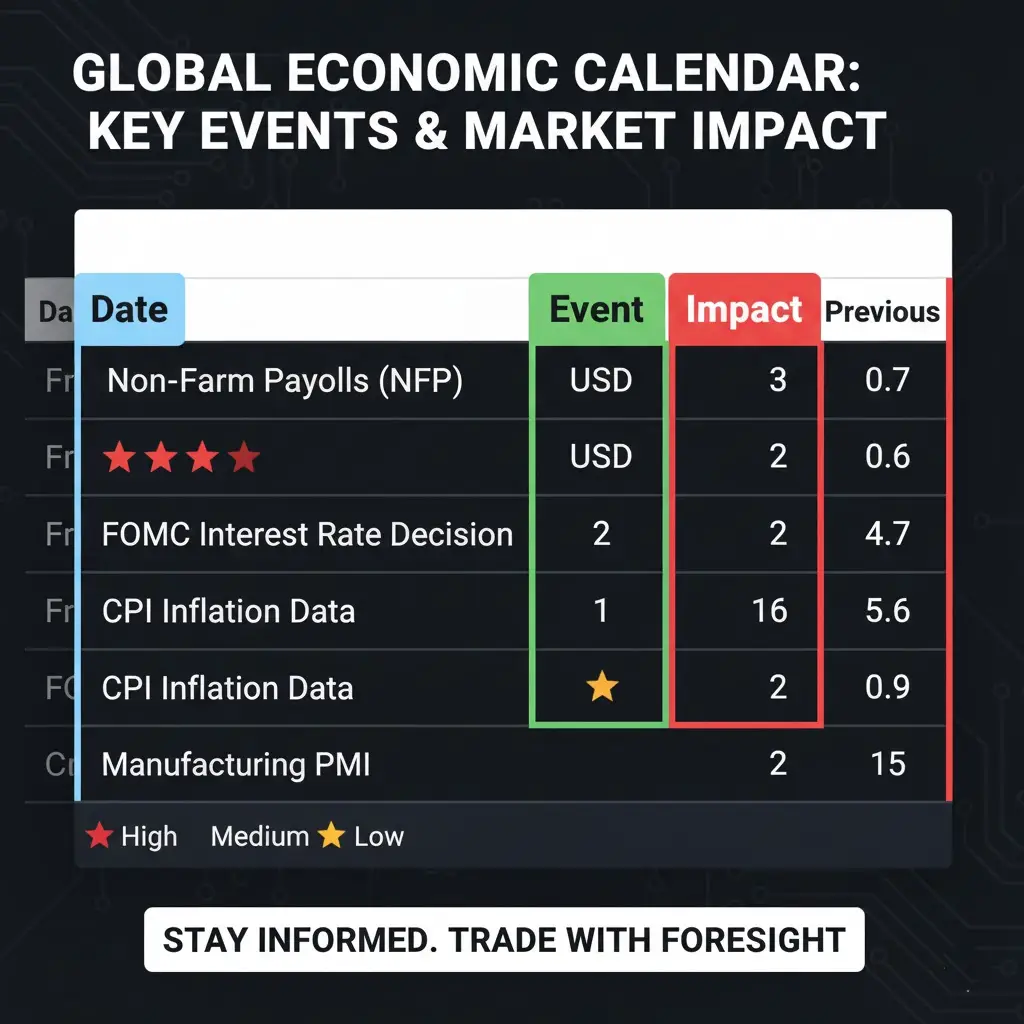
A typical economic calendar includes several key fields:
- Date and Time: The exact moment of the release (e.g., 10/14/2025, 08:30 GMT). It indicates when the data will be published, allowing the trader to prepare.
- Country or Region: The origin of the event (e.g., United States, Europe, China). It helps identify which markets might be affected.
- Event/Indicator: The name of the data or event (e.g., “Non-Farm Payrolls (NFP)”, “ECB interest rate decision”). It shows which macroeconomic variable is being released.
- Previous Data: The value of the indicator from the previous publication (e.g., previous NFP: 240K). It provides context on how the economy has changed since the last report.
- Forecast: The market consensus or forecast (e.g., expected NFP: 200K). It indicates market expectations, which are essential for measuring the surprise of the actual data.
- Expected Impact: The classification of importance (e.g., High, Medium, Low). Events marked with high importance usually generate more volatility.
Each element informs the trader about the nature of the event and its possible influence on the market.
Filtering Events by Asset Type
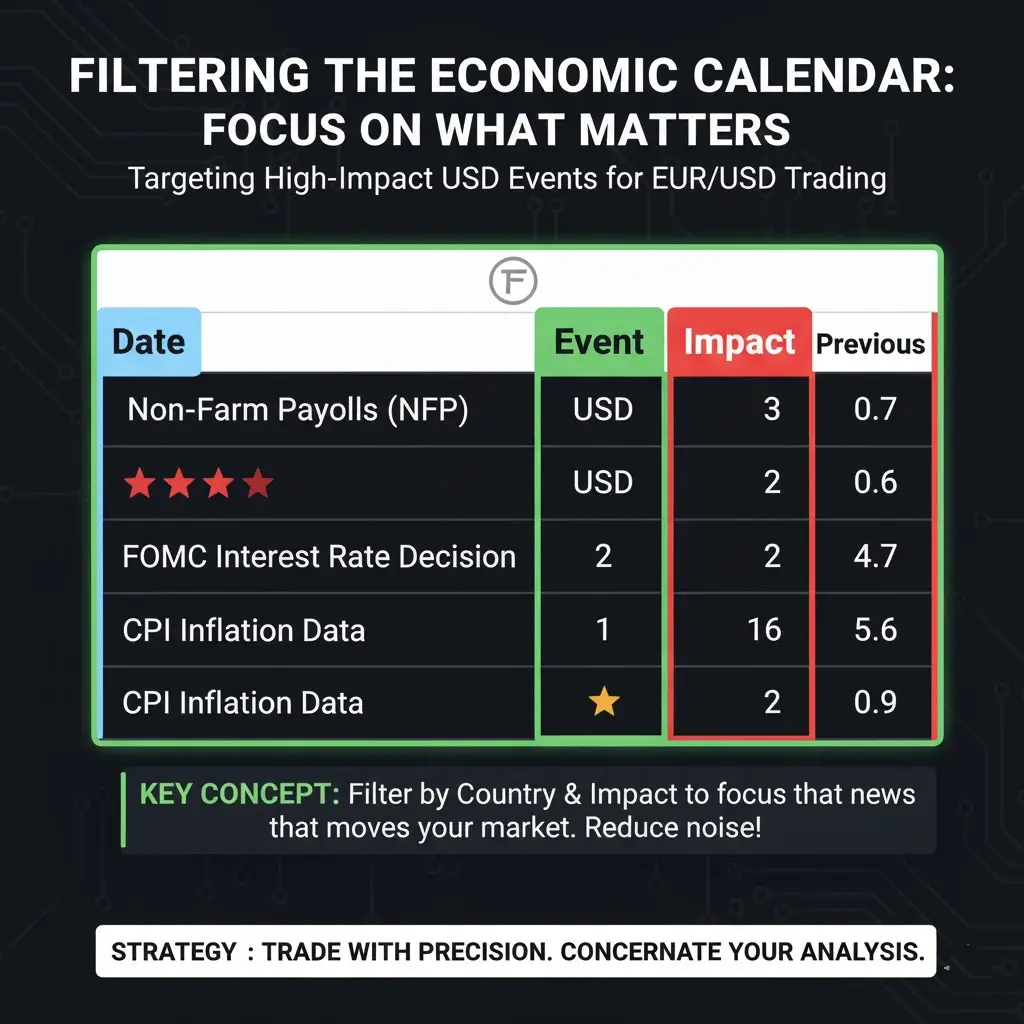
Depending on the asset being traded, certain events are more relevant:
- Forex: Central bank actions (interest rate decisions, statements), inflation data (CPI), unemployment figures and Non-Farm Payroll (NFP) in USD. These indicators affect currency strength and exchange rates.
- Stock Indices: Broad economic indicators and corporate earnings. Events such as GDP, consumer spending, or industrial production at the national level, as well as earnings reports of large companies, can move indices.
- Commodities: Inventory reports (e.g., weekly crude oil inventories from API/EIA), OPEC production decisions, weather data (for agriculture and energy), and indicators impacting the dollar (since many commodities are priced in USD).
Volatility Traps in News
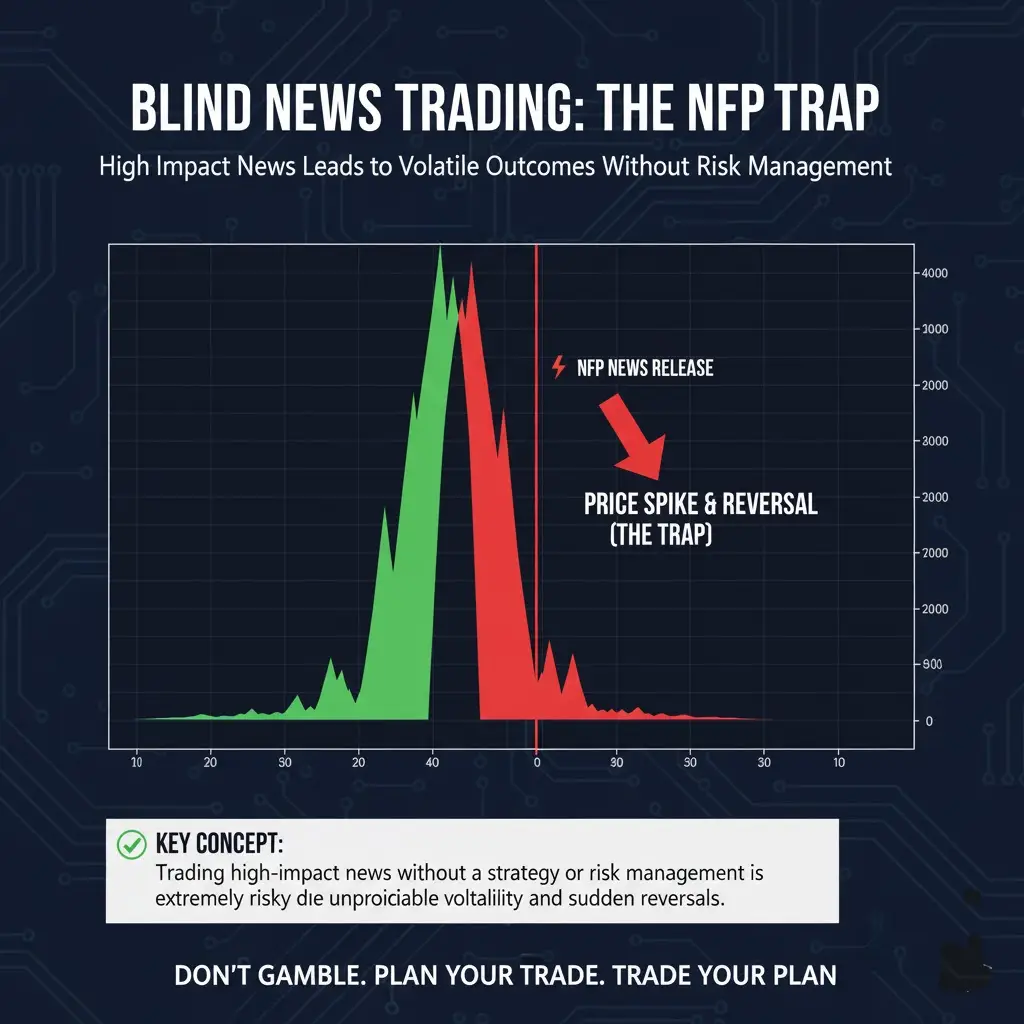
Volatility traps are situations where the market makes abrupt moves after an announcement, negatively affecting an unprepared trader:
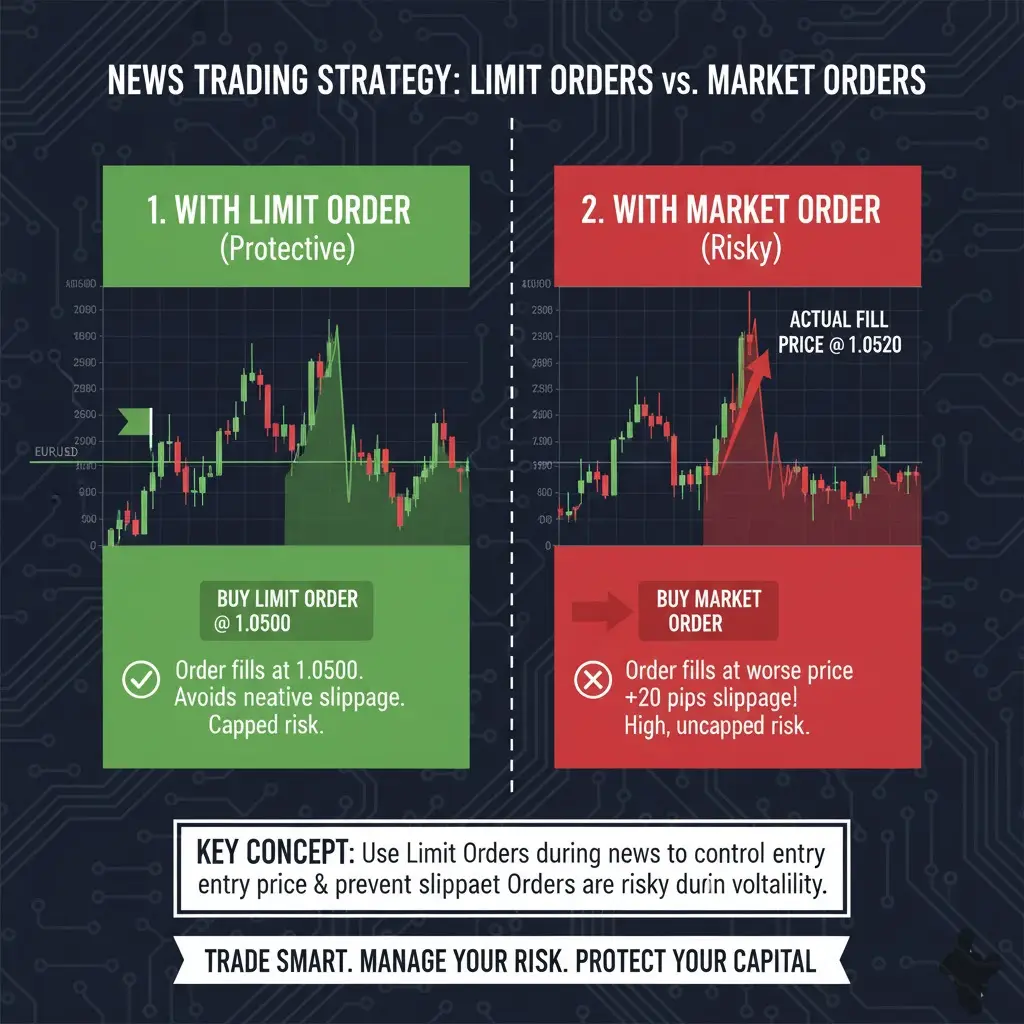
- Slippage: Occurs when your order is filled at a worse price than expected due to rapid movements. For example, you want to buy EUR/USD at 1.1000 but after a strong data release the price jumps to 1.1020.
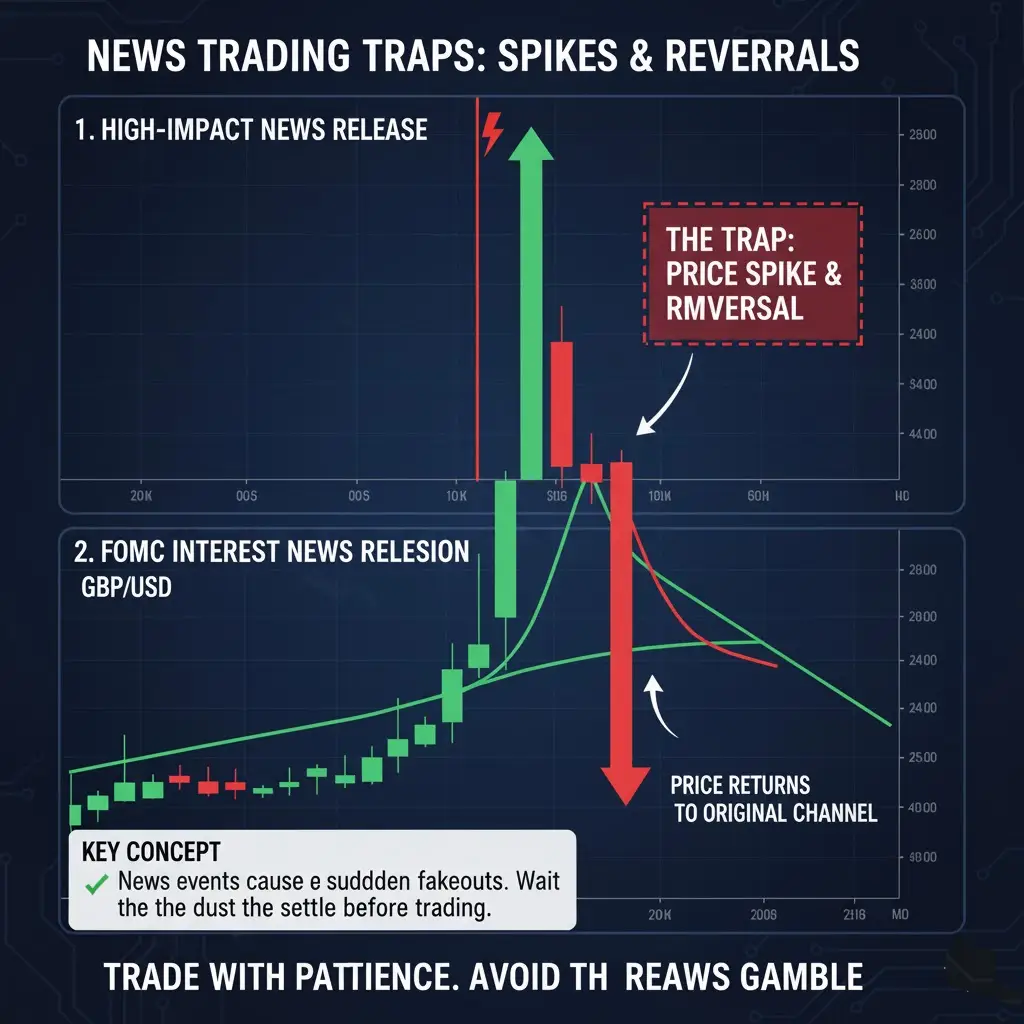
- False moves: After the announcement, the price may spike in one direction and then quickly reverse, “sweeping” stops before resuming the opposite trend. This creates artificial gains for some and sudden losses for others.
- Manipulations: Liquidity providers may push the price briefly (for example, faking a drop and then raising it) to trigger other traders’ stops. This kind of “stop hunting” exploits the vulnerability during volatile moments.
Strategies to Avoid Volatility Traps
To protect your capital from extreme volatility, several practices are recommended:
- Avoid trading during the event: The simplest tactic is not to open new positions right before or during the release of important data. Volatility is usually unpredictable at that instant.
- Widen the stop-loss range: If you decide to stay in the trade, place your stop-loss beyond the normal volatility range to avoid being stopped out by a typical spike.
- Use limit orders: Instead of market orders, use limit orders at specific prices. This avoids slippage, since your order will only execute if the price reaches your set level.
- Wait for post-event confirmation: After the announcement, many traders wait a few minutes for the noise to settle. Observing the initial reaction and entering afterward, once the direction of the movement is clearer, can avoid traps.
Simulated Example of Misusing the Calendar
Imagine a trader plans to open a buy position in EUR/USD just before the release of the US Non-Farm Payroll (NFP) at 08:30 GMT, as indicated on the calendar. The trader assumes the result will be strong and places a market order at 1.1000 with a tight stop-loss at 1.0980.
When the data is released, the unexpected happens: the payroll figure is much lower than expected, weakening the dollar. The EUR/USD quickly jumps to 1.1030, but that initial move triggers a wave of sell orders that causes the price to immediately pull back. The temporary spike pushes the price up to 1.1050 before reversing, and the trader’s stop, set at 1.0980, is hit by the widening spread and slippage, closing his trade with a significant loss.
This scenario shows how blindly trusting the calendar without risk management can lead to negative outcomes.