

Monetary policy is the set of actions taken by central banks to control the money supply and maintain financial stability. Institutions like the US Federal Reserve (Fed), the European Central Bank (ECB), or the Bank of England (BoE) adjust monetary policies to ensure balanced growth. The main goal is usually to keep inflation under control (around 2%) and support sustainable economic growth. Additionally, central banks try to avoid speculative bubbles and protect the value of the currency.

Objectives of Monetary Policy
The basic objectives include:
- Inflation control: Prevent prices from rising or falling too quickly. Moderate inflation fosters stability and confidence among businesses and consumers.
- Economic stability: Smooth out business cycles. During recessions, central banks stimulate credit and investment; during strong expansions, they cool down overheating.
- Sustainable growth: Maintain high employment and stable production, avoiding sharp fluctuations.
For example, during the 2008 financial crisis and the 2020 COVID-19 pandemic, many central banks aggressively cut their interest rates and purchased assets (quantitative easing) to support the economy.
Central Bank Instruments
Central Banks have various tools to influence the economy. The most important include:
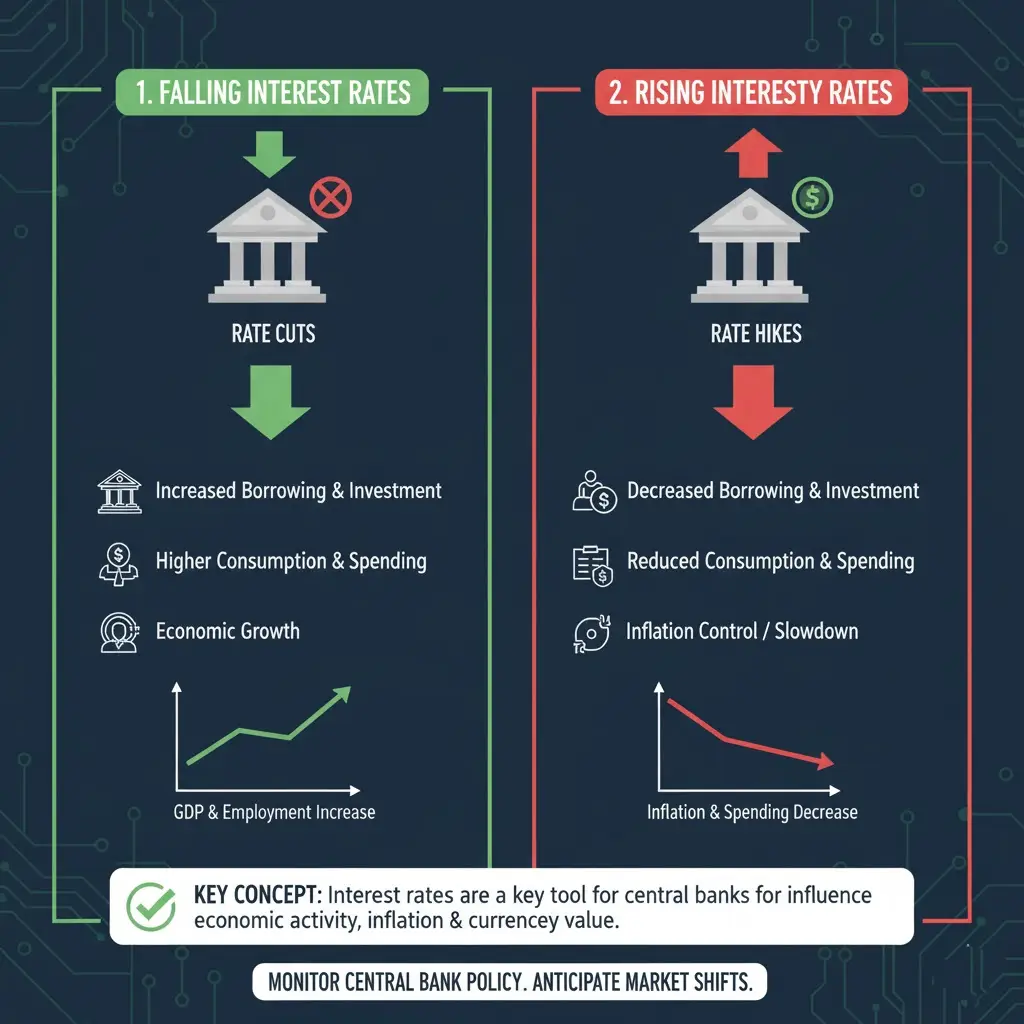
- Interest rates: This is the main lever. Raising rates (restrictive policy) makes credit more expensive, reducing demand. Lowering rates (expansionary policy) makes credit cheaper, stimulating investment and consumption.
- Open market operations: Buying or selling government bonds. Buying bonds injects liquidity into the system and lowers short-term rates. Selling bonds takes liquidity out and pushes rates up.
- Bank reserves and reserve requirements: The central bank can change the reserve ratio that commercial banks must hold. Reducing this ratio leaves more money in circulation (expansionary); increasing it removes money from the system (restrictive).
- Standing facilities and forward guidance: Providing short-term loans to banks or announcing future policy plans to guide expectations.
For example, during 2022-2023 the Fed raised rates to curb post-pandemic inflation, whereas it lowered rates in 2020 to prevent a sharp recession. The ECB also kept rates very low until 2019 and then gradually raised them in response to inflation in 2022. The BoE has followed a similar pattern, adjusting its rates after Brexit and the pandemic. In exceptional scenarios, extraordinary measures are applied, like large-scale bond purchases (quantitative easing) or emergency loans to troubled banks.
Expansionary vs. Restrictive Policies
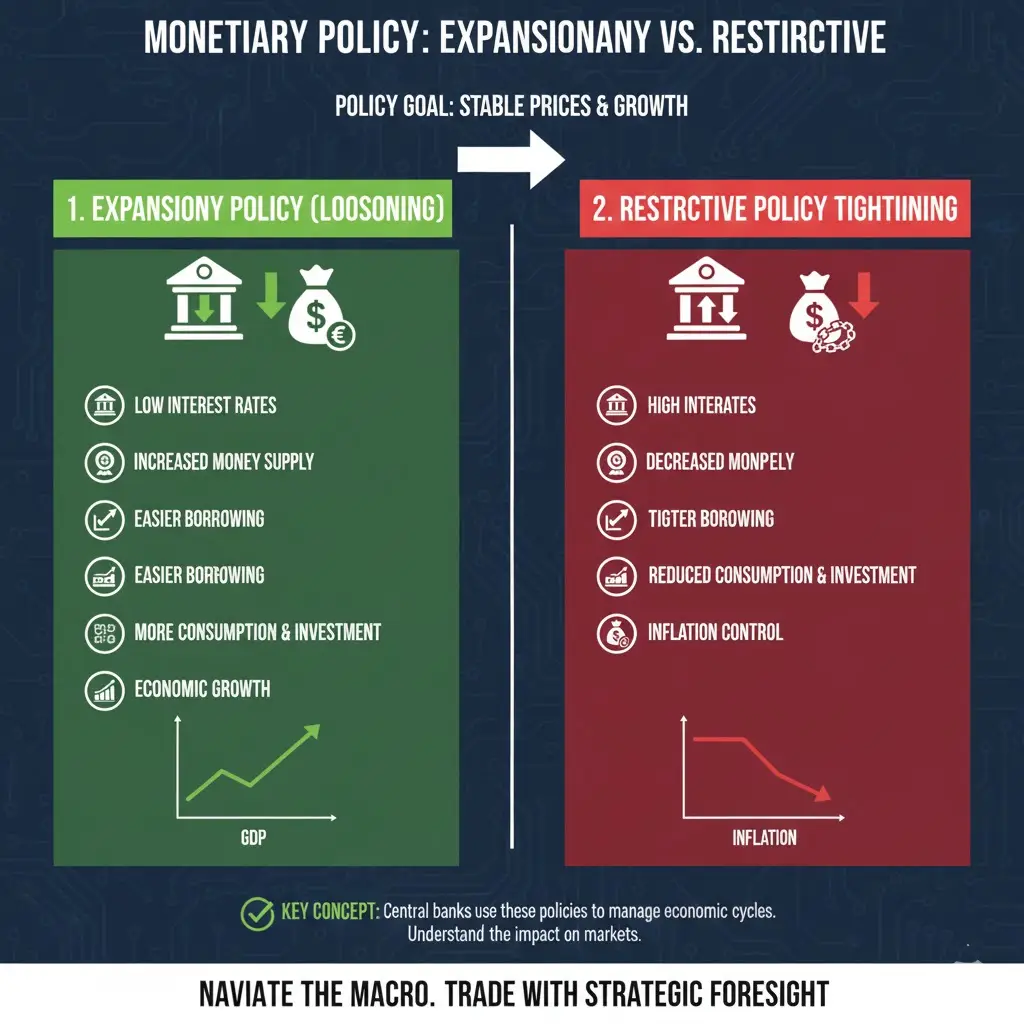
- An expansionary monetary policy lowers interest rates and increases liquidity to stimulate the economy. It is used when there is low growth or risk of deflation. Historical examples: the Fed brought rates near zero after 2008 and in 2020; the ECB implemented several asset purchase programs after the European debt crisis.
- A restrictive monetary policy does the opposite: it raises rates and drains liquidity to cool the economy.it is applied when inflation rises too much or the economy is overheating. For example, in mid-2022 many central banks started raising their rates after a long period of stimulus, in order to combat global inflation.
In summary, expansionary and restrictive policies are opposing tools. One is activated during weak economic activity to reactivate growth; the other, when demand is excessive and puts upward pressure on prices.
Impact on Financial Markets
Central bank policy decisions have clear repercussions across different markets:
- Foreign exchange market: A higher interest rate generally attracts foreign investment, strengthening the local currency (e.g., a rate hike in the US often strengthens the dollar). Conversely, low rates can devalue the currency against others.
- Stock market: When rates rise, companies face higher financing costs and investors may prefer bonds; this usually puts downward pressure on stock prices. Low rates tend to boost stocks by making loans cheaper and making fixed-income investments less attractive.
- Commodities: Behaviors can vary. A stronger dollar (due to higher rates) can reduce the price of dollar-priced commodities (like oil). High rates also slow the economy, reducing demand for raw materials. On the other hand, with expansionary policy, economic stimulus can raise the prices of metals, energy, and food.
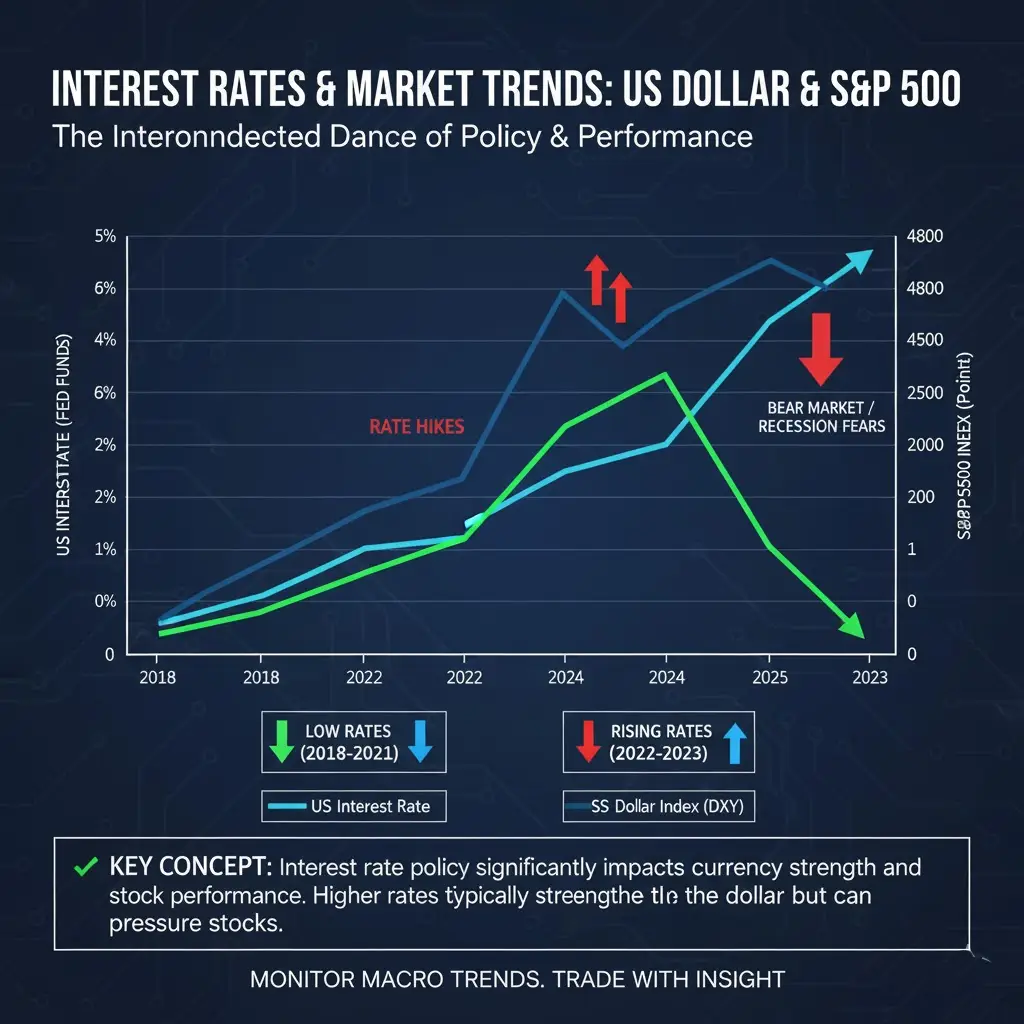
Expectations also play a key role. If markets believe a central bank will keep rates low for a long time, risk assets (stocks, commodities) may rise and the local currency may weaken.
Forward Guidance
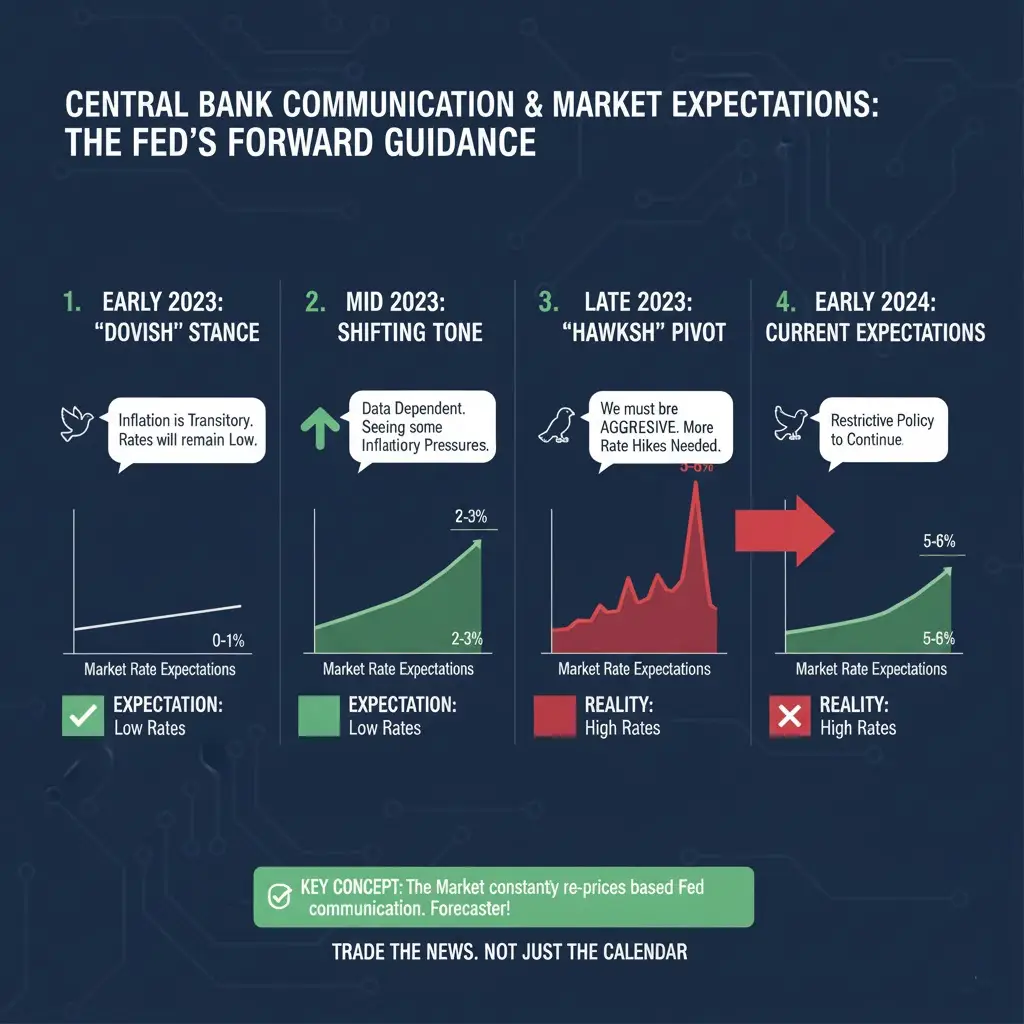
Forward Guidance is the communication about future monetary policy decisions. It involves the central bank giving hints or forecasts about the evolution of rates and the economy. For example, the Fed may announce that it expects to keep rates high while inflation remains above target. This influences investors’ and consumers’ expectations: if high rates are anticipated, people may restrain spending or invest in safe assets, dampening demand. Conversely, signals that rates will fall in the future can encourage borrowing and investing today.
Forward Guidance improves the transparency and credibility of the central bank. It helps guide market behavior without immediately changing rates. However, its effectiveness depends on the confidence agents have in the central bank’s word.